Status in Alberta:
Soapweed – Endangered (At Risk); Yucca Moth – Endangered
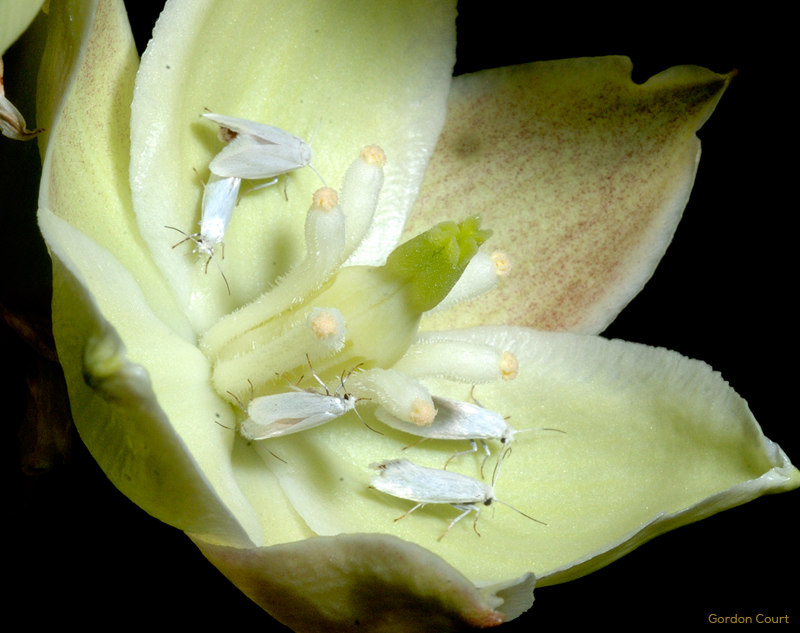
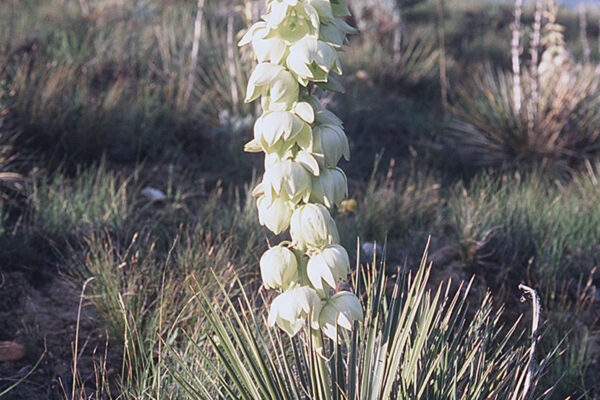
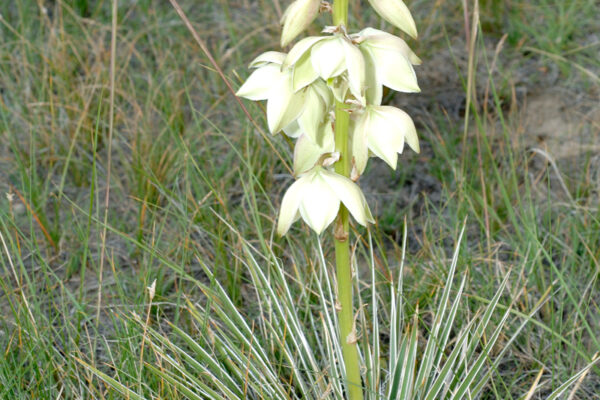
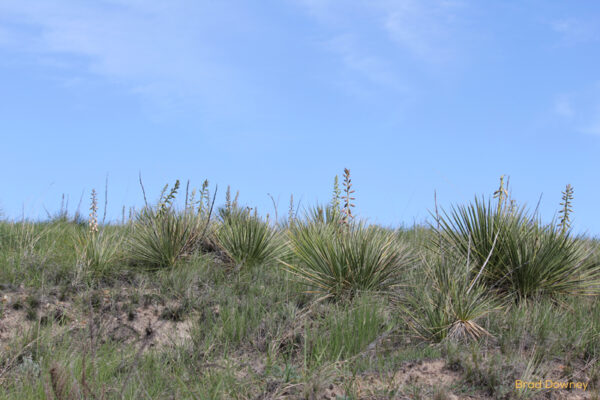
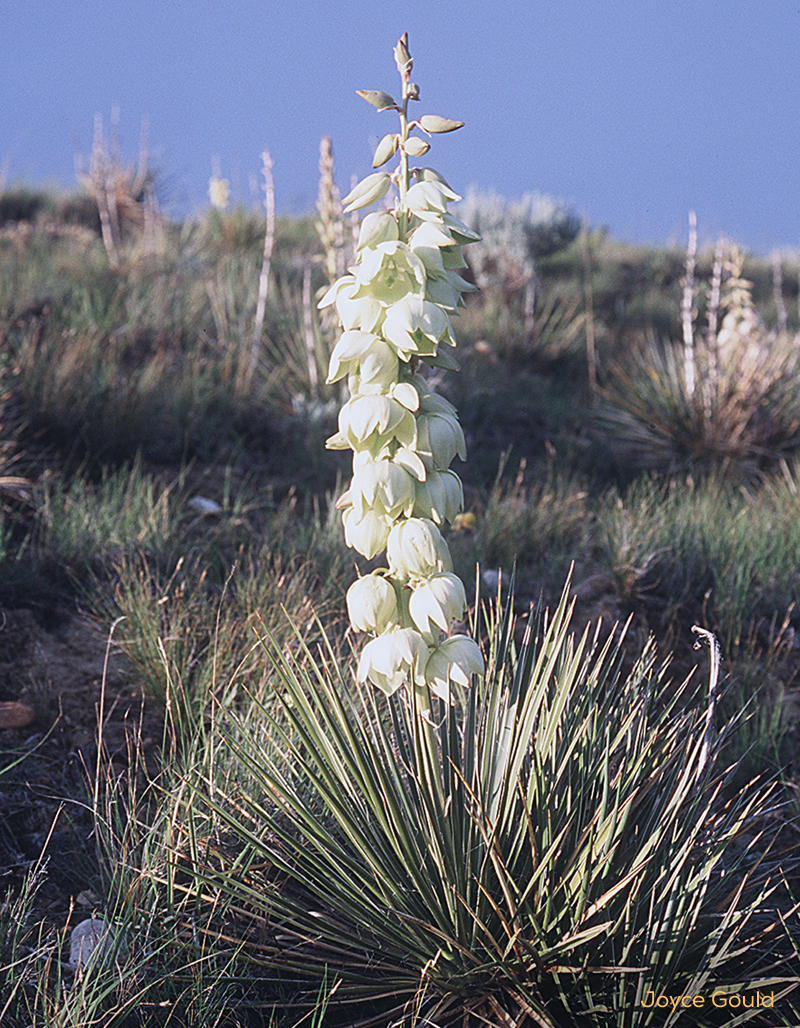
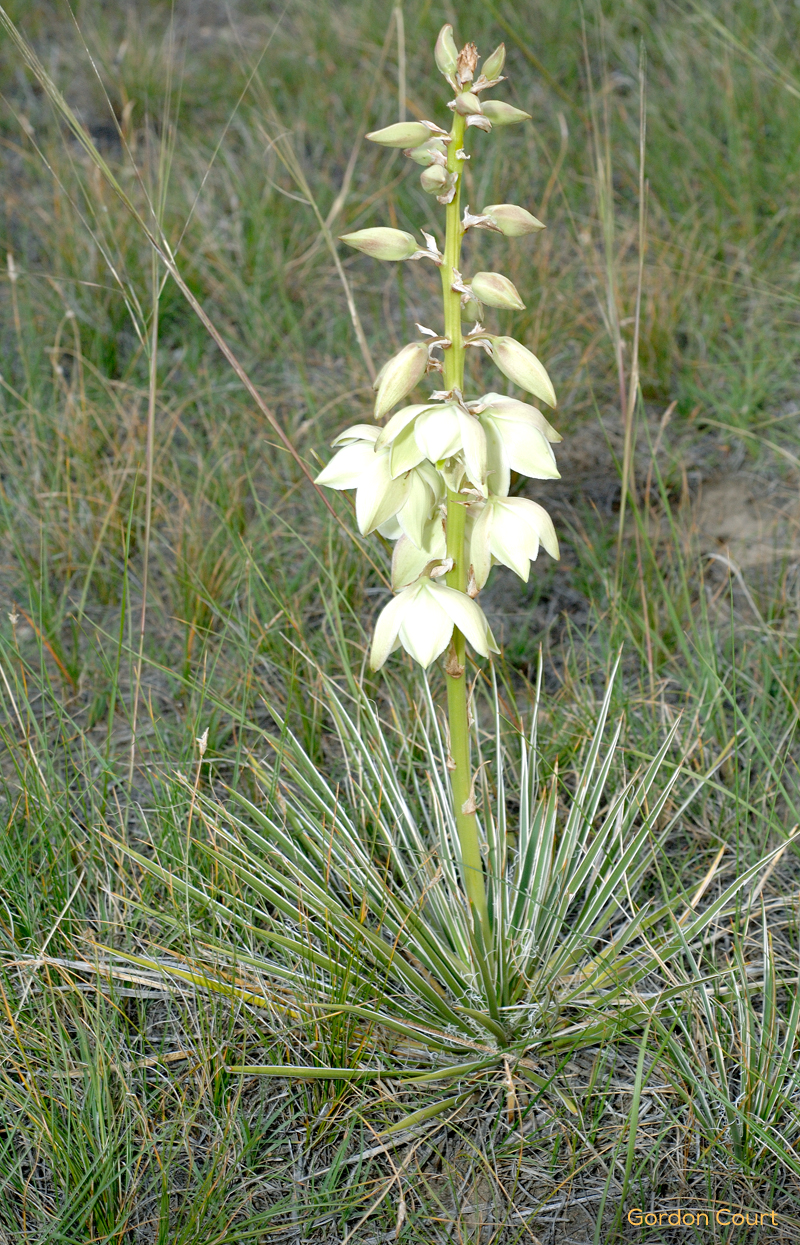
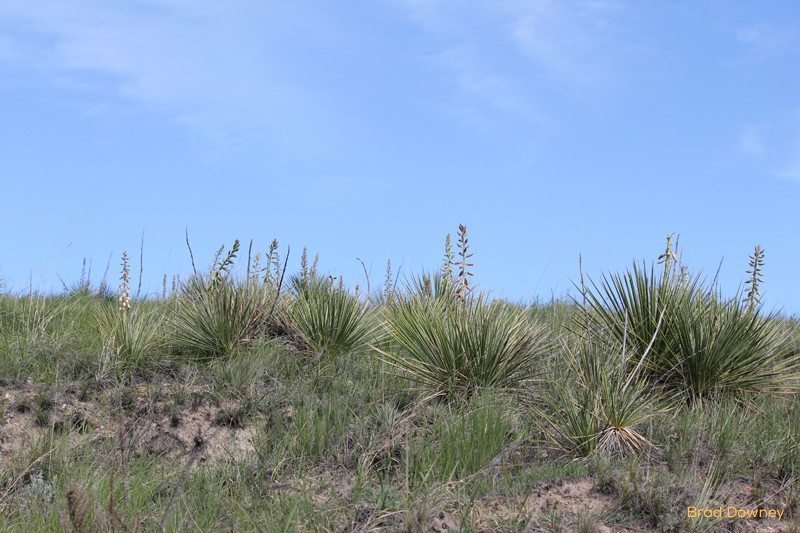
Soapweed plants grow on dry eroding south or east facing slopes with sparse vegetation. Yucca Moths are found within the vicinity of stands of Soapweed plants.
Soapweed and yucca moths need each other to survive.
The plant is called Soapweed because of the high concentration of saponins in their roots. Saponins are chemicals that foam when mixed with water and are used in soaps.
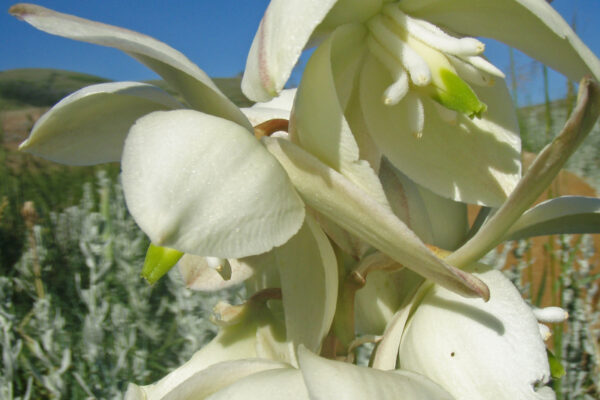
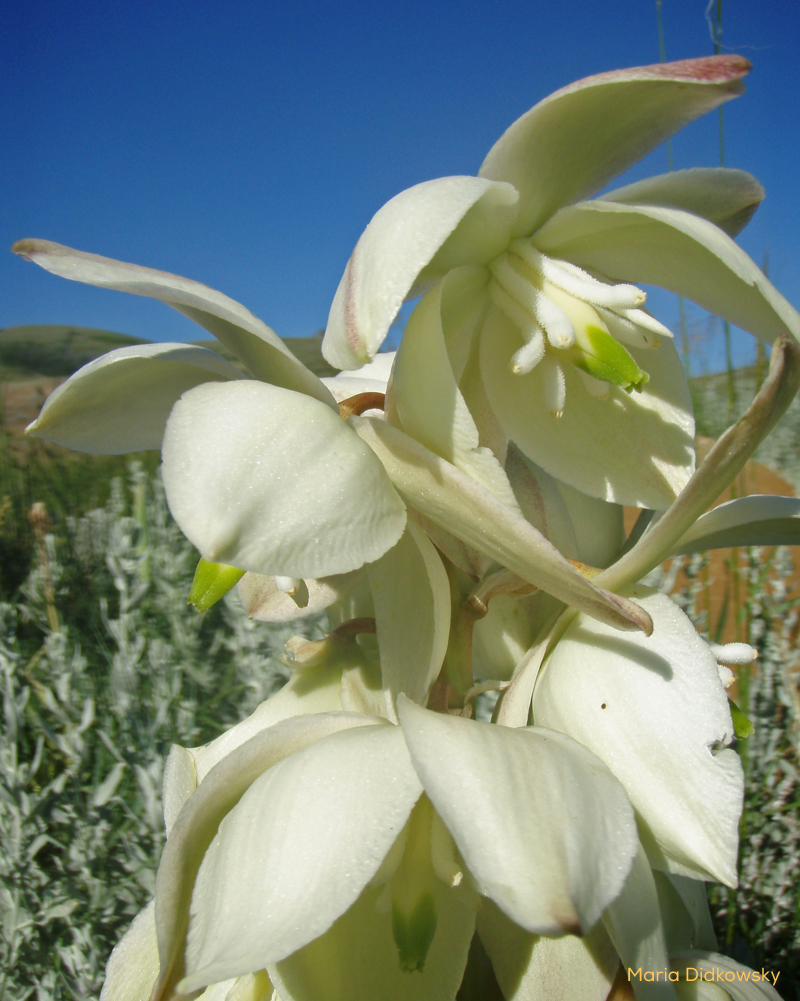
The lifecycles of Soapweed and the Yucca Moth are closely entwined and they need each other to survive. Soapweed requires the Yucca Moth to pollinate it so that it can produce fruit and seeds. Yucca Moths lay their eggs in Soapweed flowers and the caterpillars hatch in the seed pods and feed on the developing seeds. They eventually chew their way out of the seed pod, spin a silk line to the ground and burrow into the soil where they spin their cocoon and pupate. Not all of the seeds are eaten by the caterpillar, so that the plant can still reproduce.
Soapweed plants take 15-20 years to mature and only produce their dramatic flower spikes every two to three years. If pollinated, they produce seeds that are viable for only one year.
Yucca Moth cocoons remain in the soil for one to four years. When the adult moths emerge, they live for about four days and must mate and lay their eggs during that time to ensure their continued existence.
Both species are at the northern limit of their range in Alberta. As neither the flowering of the Soapweed plants nor the emergence of the moths is a sure thing in any given year, the survival of both species in Alberta is an extremely impressive feat.
Two other moth species rely on Soapweed to complete their lifecycle – the Non-pollinating Yucca Moth and the Five-spotted Bogus Yucca Moth. They do not pollinate the flowers. Both species are present in Alberta’s Soapweed patches.
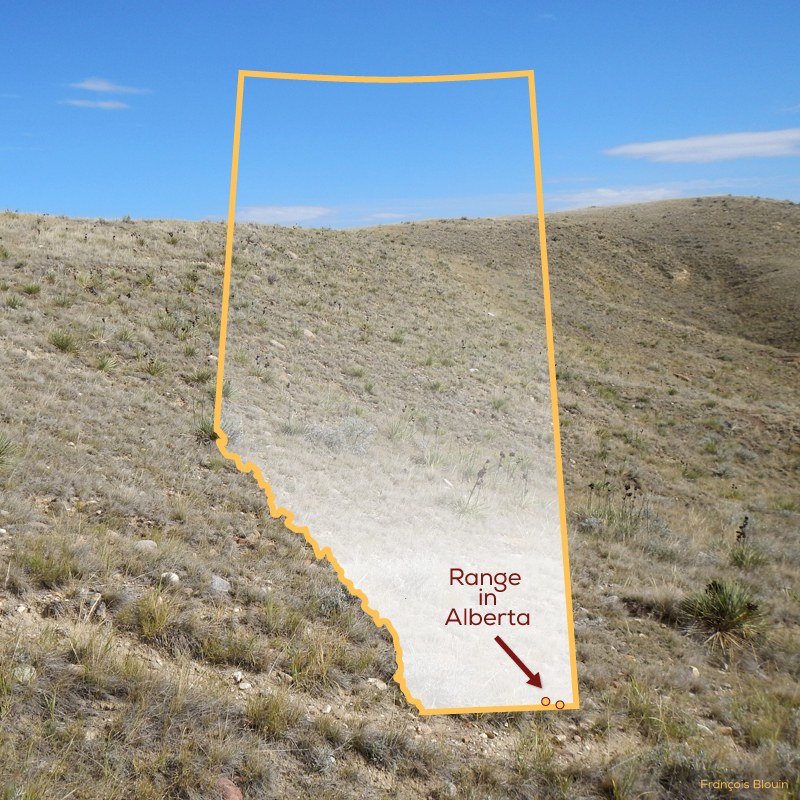
There are only two known natural populations of Soapweed and Yucca Moths in Alberta, both in the Milk River Watershed, on public (crown) land. These populations represent the northern limit of their range in North America.
A survey in 1998 found 28,174 Soapweed plants (from 8499 clones) at one site and 1,383 plants (from 404 clones) at the other site. A census in 2004 found additional plants at the less populated site. Yucca Moths exist at both sites, but are less numerous and more sporadic at the site with fewer plants.
Test your knowledge about Alberta’s grassland species at risk
© 2026 Multisar. All Rights Reserved