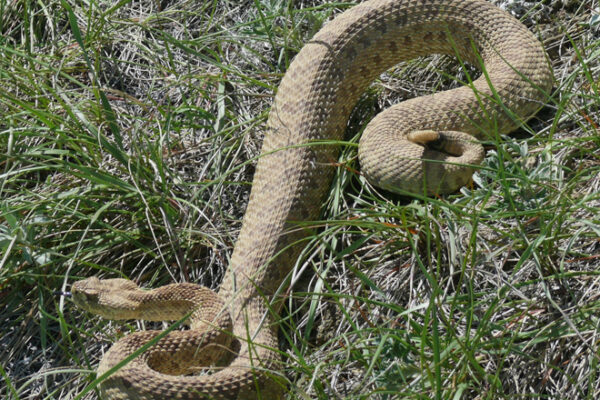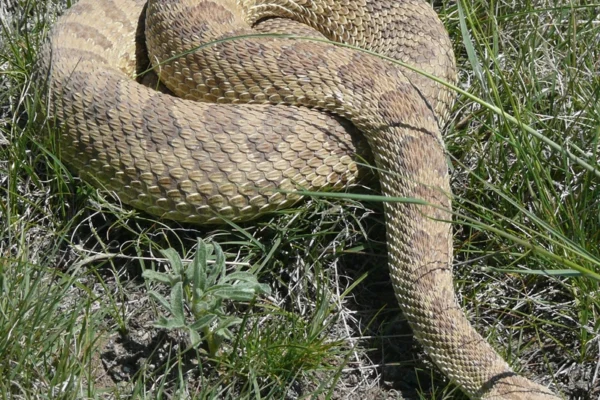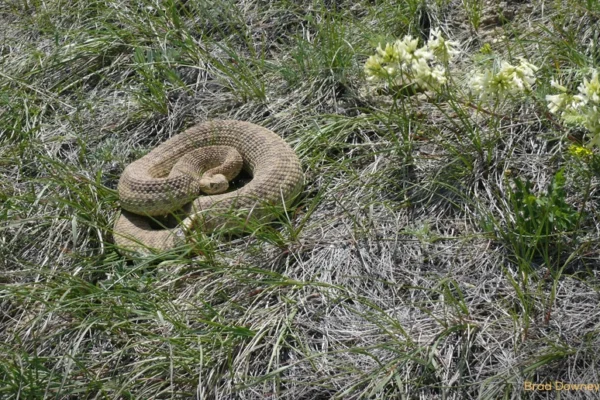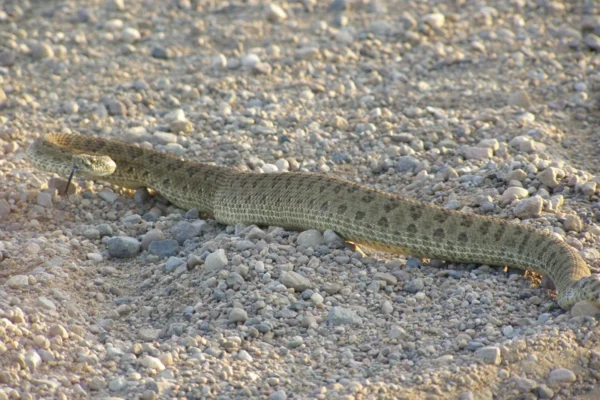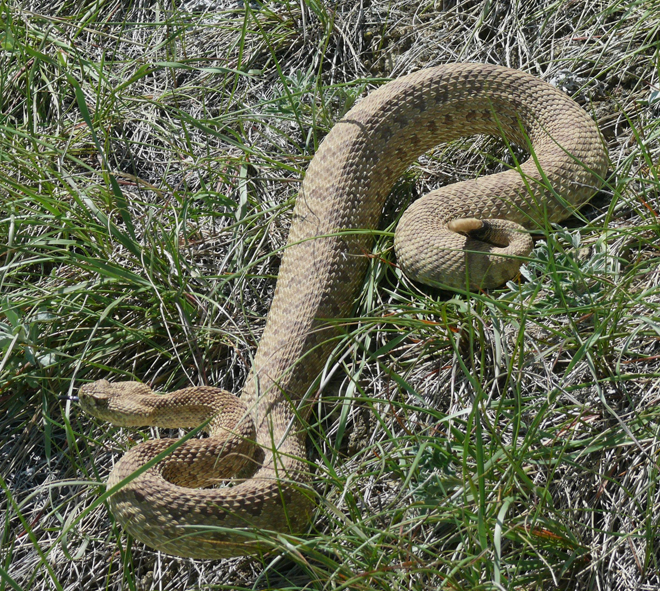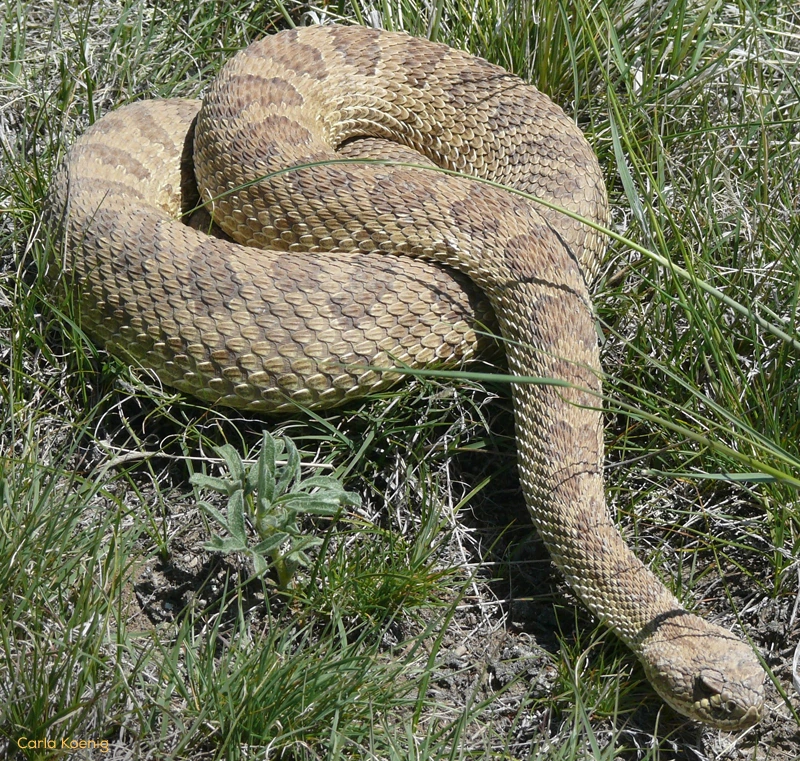
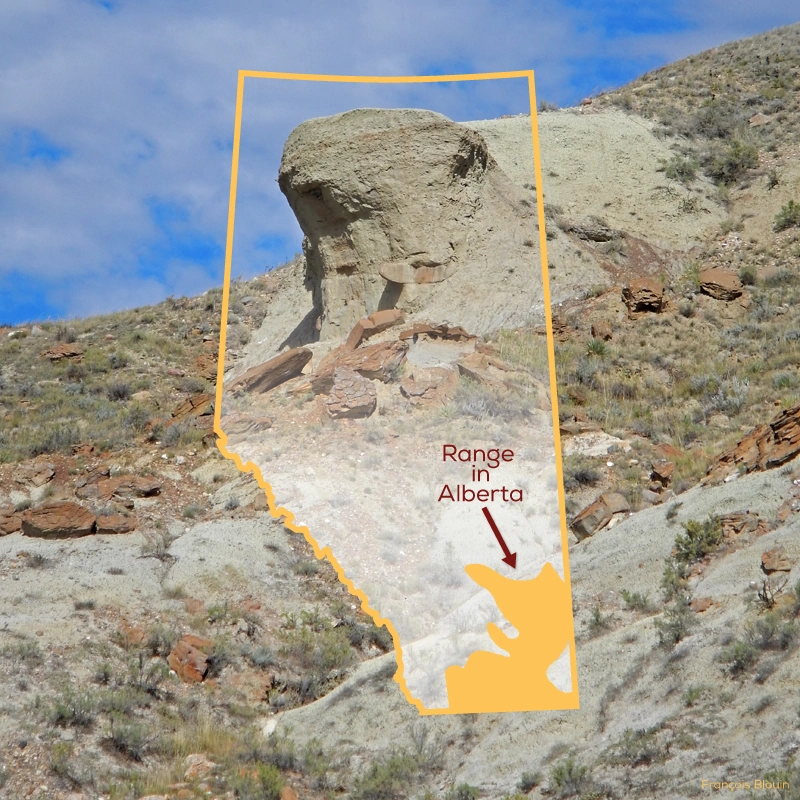
Status in Alberta: Special Concern (May be at Risk)
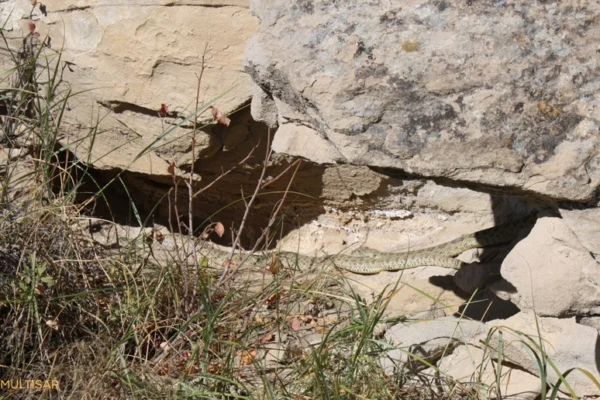
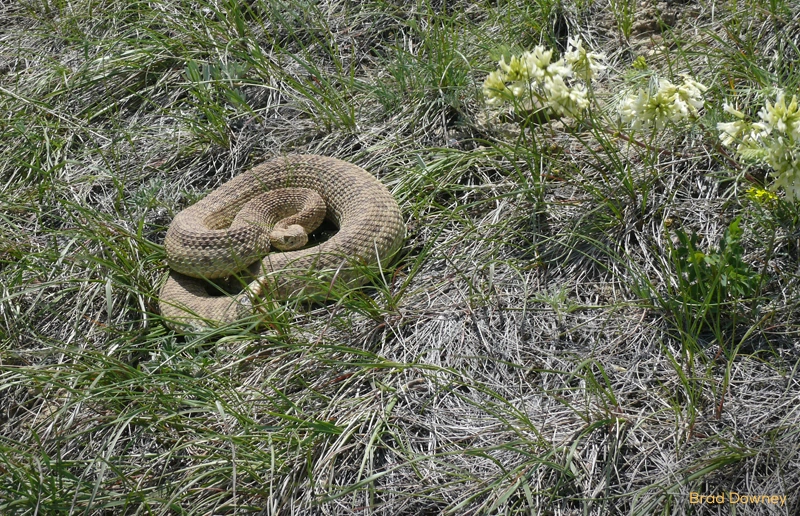
Foraging habitat includes native grasslands, badlands, sage flats and occasionally cropland and tame pasture. Hibernation sites and birthing sites are usually rocky or sandy and associated with river valleys or coulees.
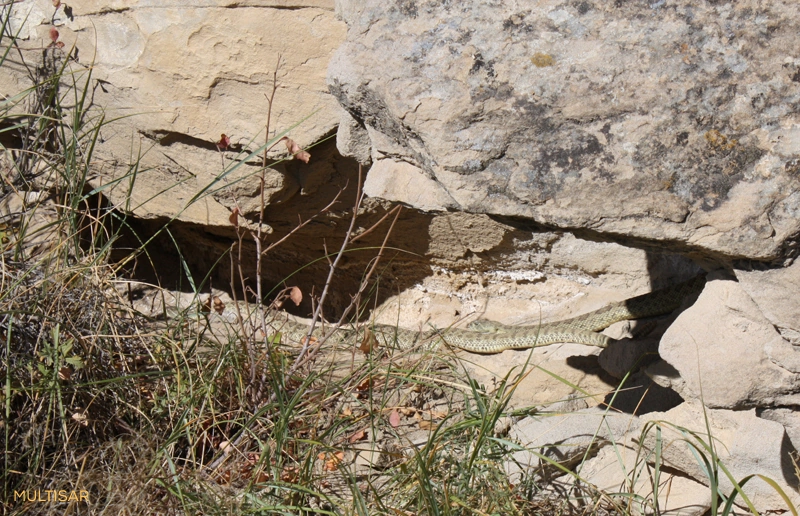
To survive Alberta’s winters, Prairie Rattlesnakes hibernate in communal dens where mammal burrows, cracks and crevices extend below the frost line. They often share these dens, called “hibernacula” (singular “hibernaculum”), with Wandering Garter Snakes, Plains Garter Snakes and Bull Snakes.
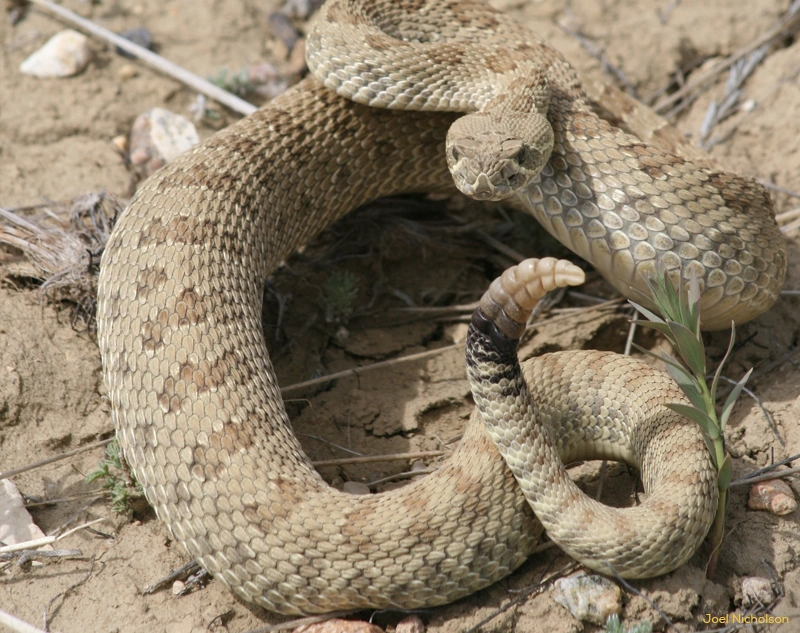
Prairie Rattlesnakes give birth to 4-13 live young in the early Fall. Pregnant females gather at warm, rocky sites, called “rookeries”, usually within 1 km of their hibernaculum and close to mammal burrows. The burrows provide shade and a place to escape from predators. Female Prairie Rattlesnakes become reproductive at five to seven years old and they only produce young every two to three years.
Prairie Rattlesnakes seek their prey using eyesight, smell and heat-sensing pits on their upper jaw. They prey on small burrowing mammals such as voles and mice, as well as some Richardson’s Ground Squirrels, pocket gophers and amphibians. In turn, they have to watch out for their predators, such as badgers, coyotes, hawks and eagles.
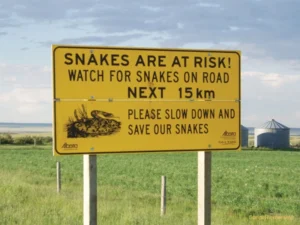
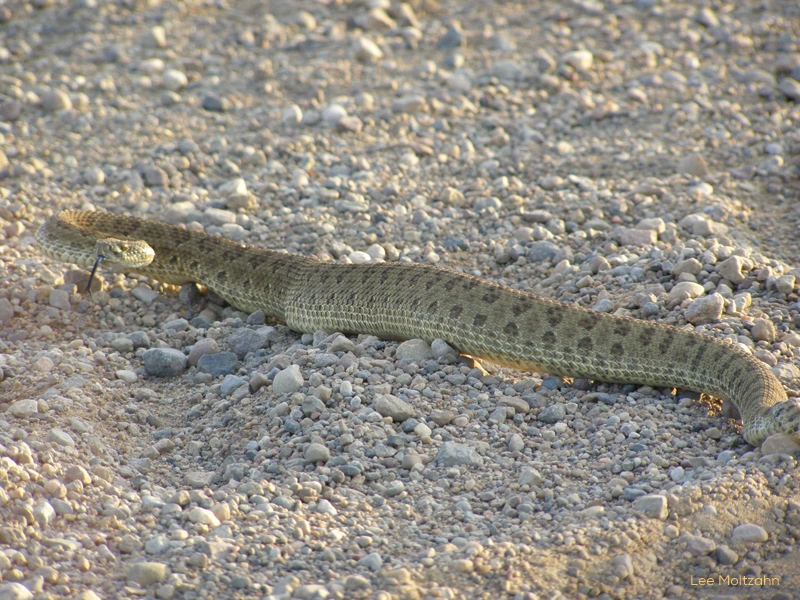
Snakes can move up to 25km away from their hibernacula in search of food. Unfortunately their movements often take them across roads where they are at risk of being hit by vehicles.
Male and non-pregnant female rattlesnakes travel up to 25 km from their hibernaculum, in search of food. They usually follow the same route back to their hibernaculum in the fall. Unfortunately some rattlesnakes are killed when their migration routes take them across roads.
A comprehensive census of Alberta’s rattlesnake population has not been conducted. However, using the number of known hibernacula, a crude estimate suggests that there are between 12,078 and 15,972 adult Prairie Rattlesnakes in Alberta.
Past population information is lacking, but it appears that there has been a significant long-term population decline since the late 1800s, primarily due to persecution and habitat loss.
Test your knowledge about Alberta’s grassland species at risk
© 2026 Multisar. All Rights Reserved