Status in Alberta: Species of Special Concern (Sensitive)
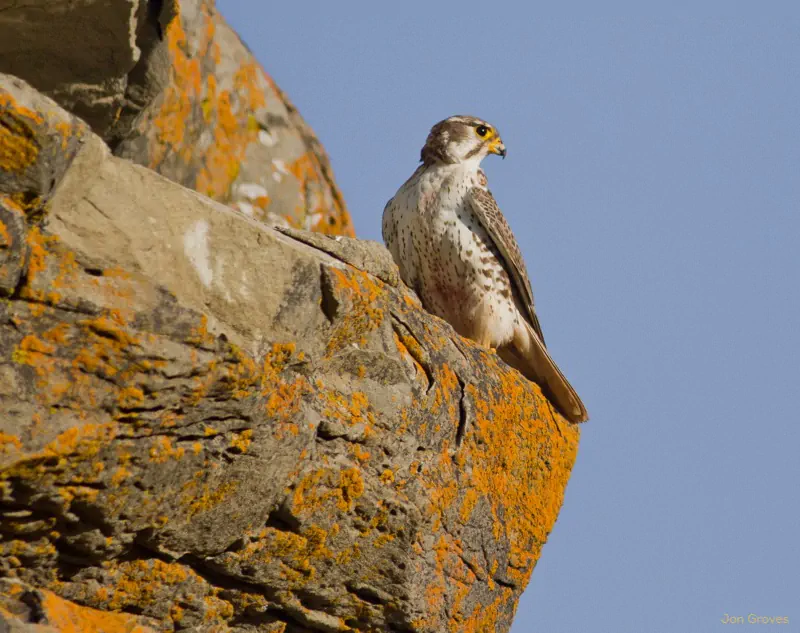
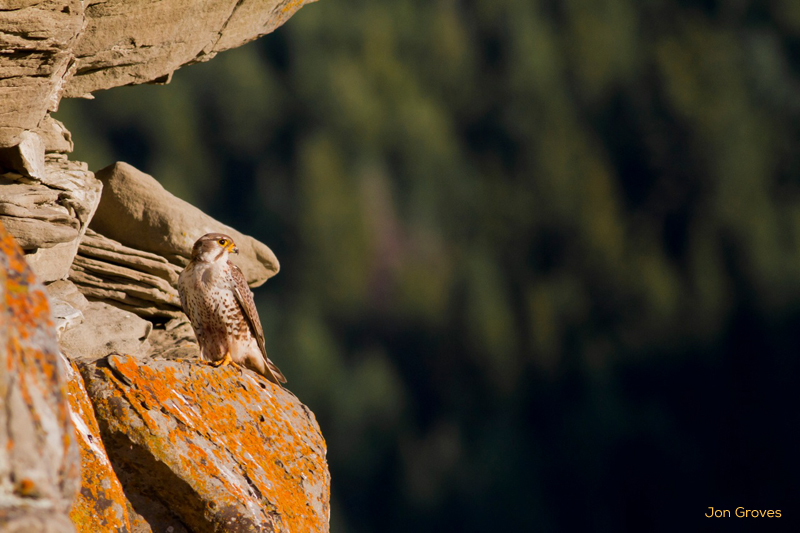
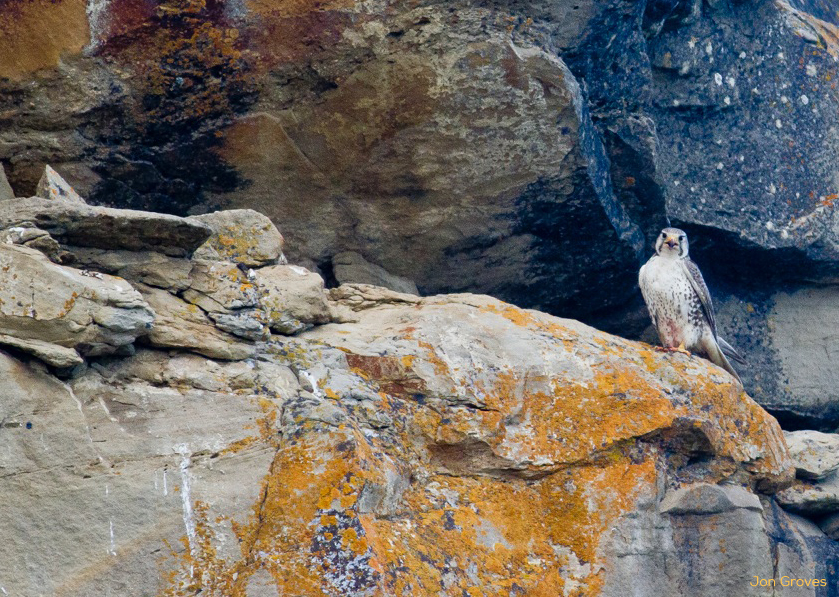
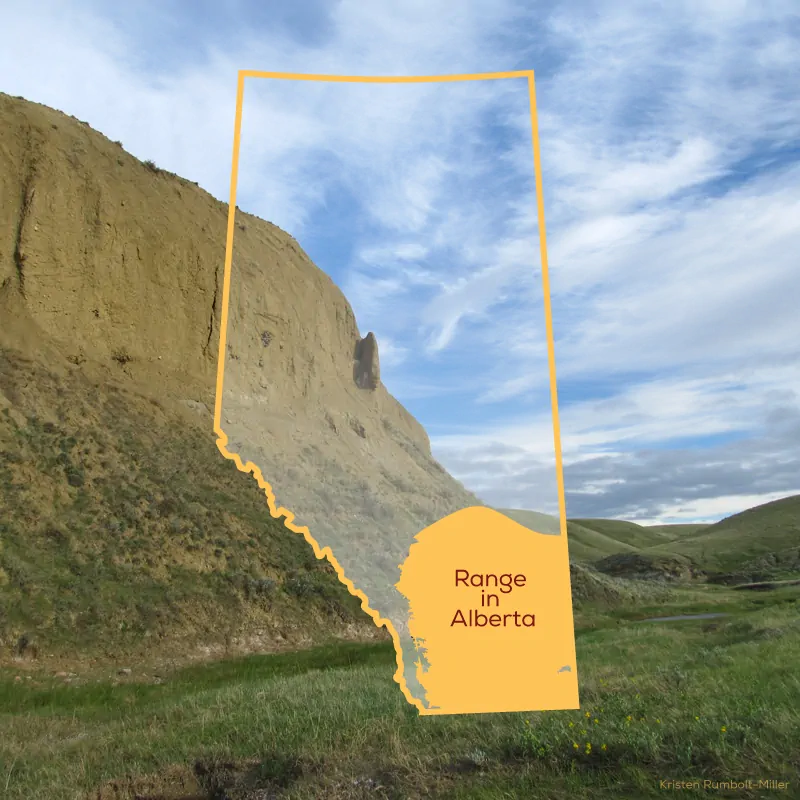
Open areas with rocky cliffs for nesting, usually along rivers in the prairies. Foraging habitat is open grasslands and nearby agricultural fields with low vegetation and ground squirrels.
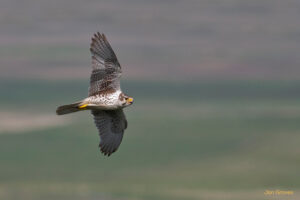
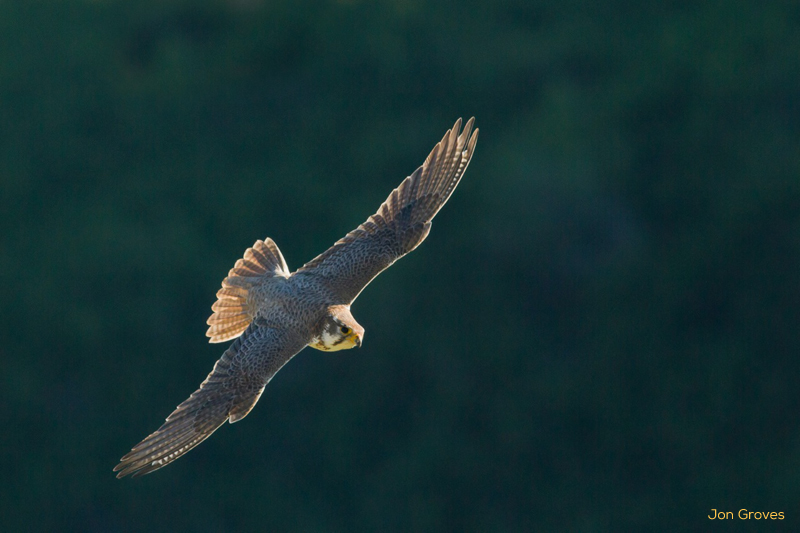
A prairie falcon can be identified in flight by its dark “armpits”.
Prairie Falcons are dull brownish birds, but a good way to identify a Prairie Falcon is to look for dark patches under the wings as it flies overhead. These dark patches give the birds the appearance of having hairy armpits.
Prairie Falcons nest in precarious places – usually on cliff ledges or in crevices and occasionally in the abandoned nest of other cliff-nesting birds. They vigorously defend their nesting territories by screaming raucously and dive-bombing intruders.
Richardson’s Ground Squirrels make up a large portion of the Falcon’s diet in the spring and summer. Prairie Falcon reproductive success is tied to squirrel abundance, with more chicks surviving in years and locations where ground squirrel populations are high.
Unlike many falcons, instead of heading south for the winter, most Prairie Falcons remain in Alberta. Not very much is known about their winter foraging habits, although they likely prey on a variety of birds and small mammals.
The most recent population assessment, in 2002, estimated 200-250 pairs in Alberta. Since then, the population is thought to have been stable, but with some local declines. While there are a handful of Prairie Falcons in British Columbia and Saskatchewan, the bulk of the Canadian population resides in Alberta.
Test your knowledge about Alberta’s grassland species at risk
© 2026 Multisar. All Rights Reserved