Status in Alberta: Species of Special Concern (Sensitive)
Native grasslands, but will use cultivated fields and tame pasture to some extent.
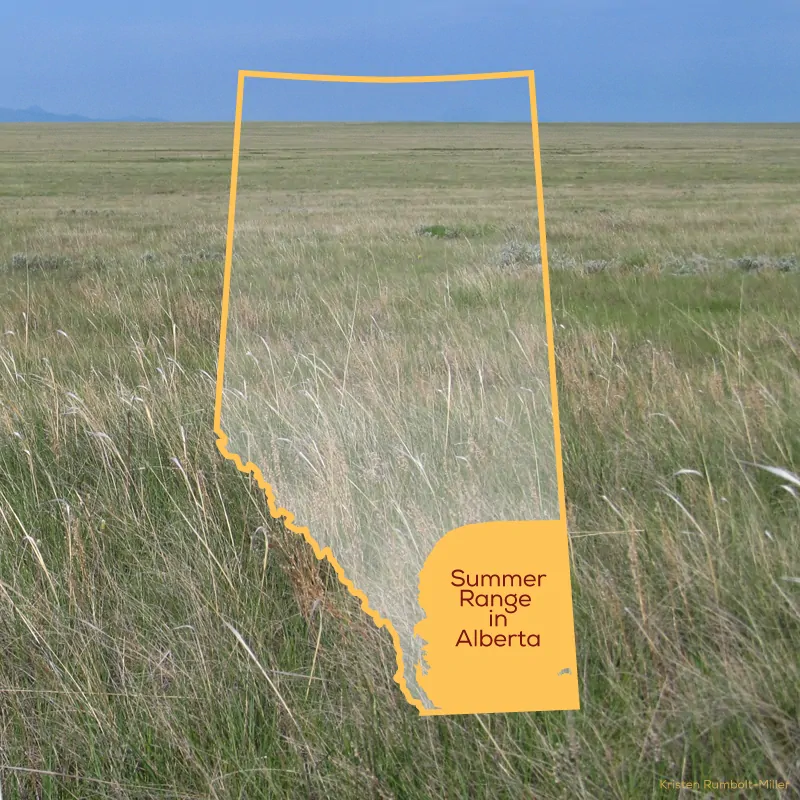
The very loud and distinctive “Cur-leeee Cur-leeee” call and long whistles of the curlew can be heard in native grasslands as early as April, indicating their return to their breeding grounds. While they are a shorebird, they do not hang out near water during spring and summer, preferring dry native grasslands for foraging and nesting.
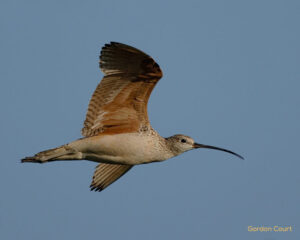
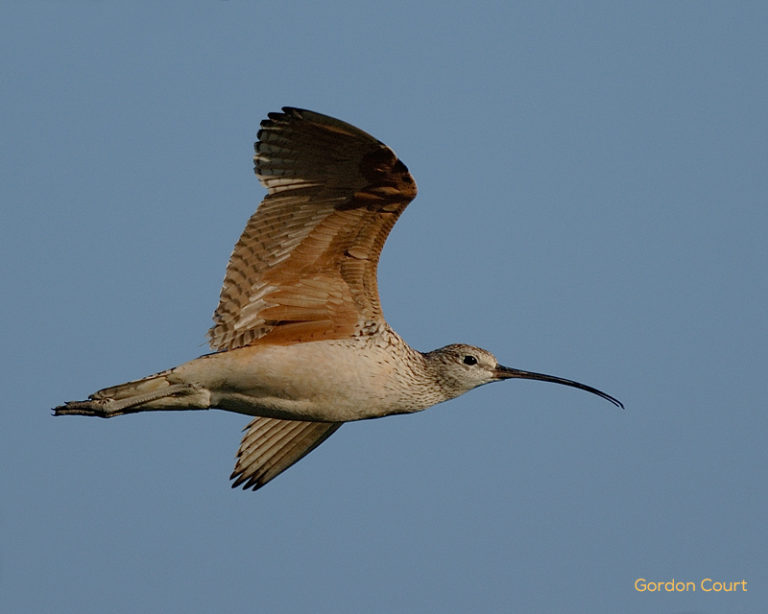
A long-billed curlew in flight.
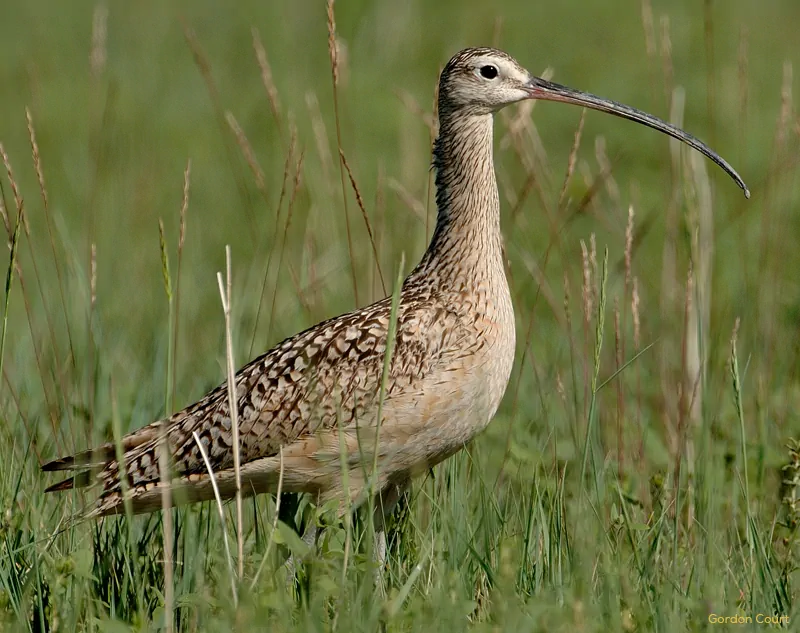
Long-billed Curlews are easily identified by their long, down-curved bill that can be up to 21 cm long. If you see a pair together, the female is the one with the longer bill.
A curlew’s summer diet consists mostly of grasshoppers and beetles, although they will also eat earthworms and sometimes songbird eggs and chicks.
Curlews nest on the ground and although they vigorously defend their nests, the young and eggs are susceptible to predation by coyotes, ravens, badgers and even ground squirrels.
A survey in 2001 estimated that there were between 19,000 and 28,700 curlews in Alberta. While this may seem like a lot, declines in other parts of its range suggest that this species should be monitored. A continent-wide survey in 2004 and 2005 found that 10-15% of the North American population and most of Canada’s curlews breed in Alberta. Thus, Alberta’s curlew population is critical to this species’ survival.
Test your knowledge about Alberta’s grassland species at risk
© 2026 Multisar. All Rights Reserved