Status in Alberta: Species of Special Concern (Sensitive)
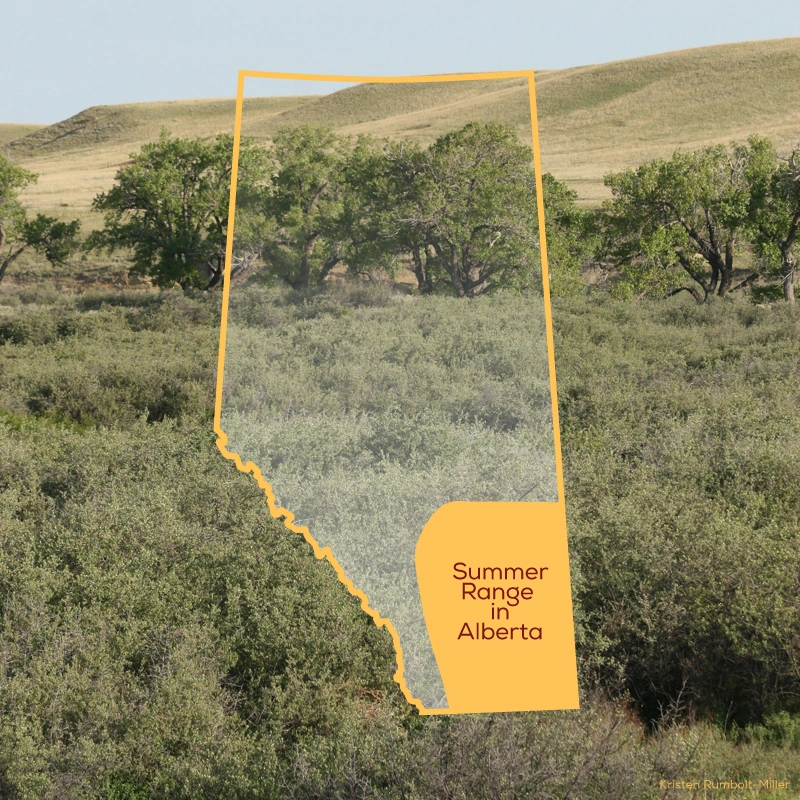
Open grasslands interspersed with occasional shrubs and trees, either naturally occurring or planted, such as shelterbelts and shrubby rights-of-way.
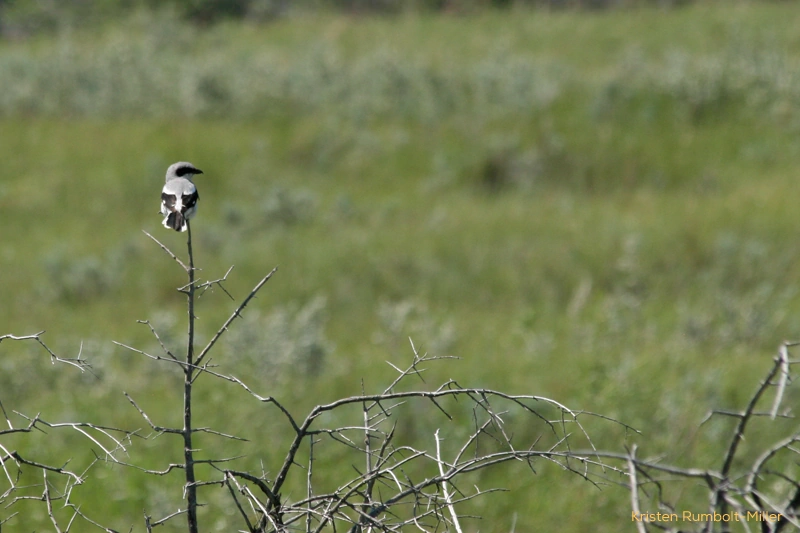
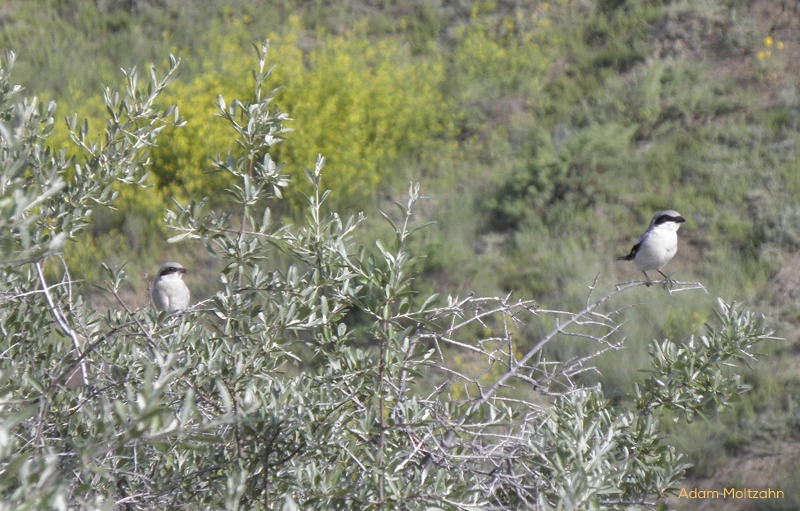
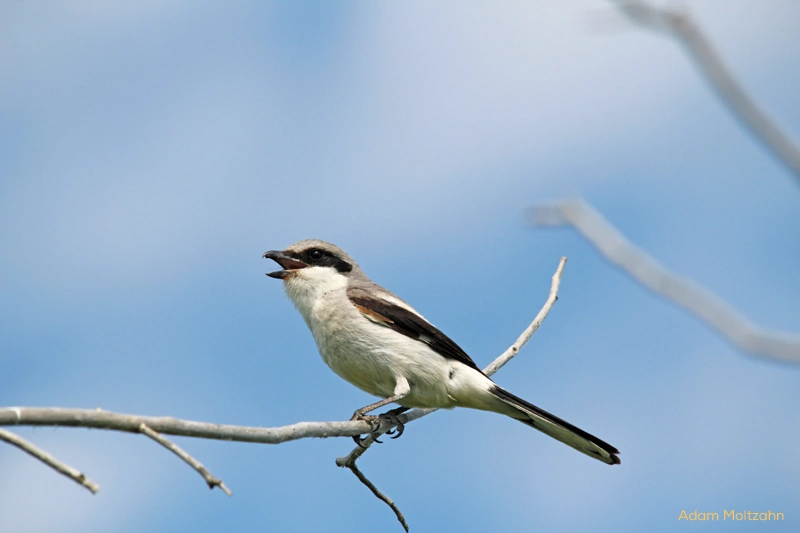
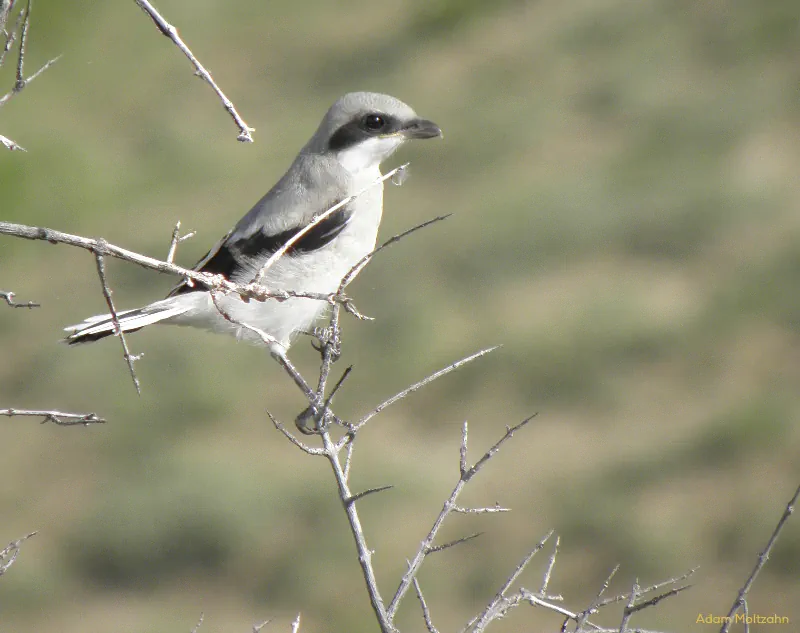
The Loggerhead Shrike is grey above, white below and a bit smaller than a robin. Key identifying characteristics are a wide black mask on its face and a powerful hooked bill.
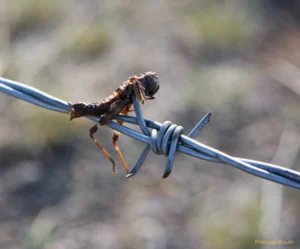
A grasshopper impaled by a loggerhead shrike on a barbed wire fence.
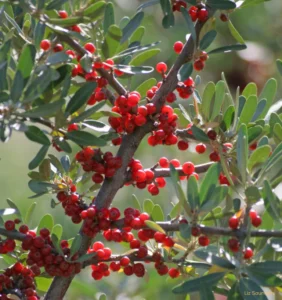
Thorny buffaloberry.
Unlike other songbirds, Loggerhead Shrikes eat small animals. Shrikes do not have strong talons, as raptors do, instead they impale their prey on thorns and barbs. This has earned them the nickname of “butcherbird”. In addition to voles, mice and squirrels, they also eat birds, reptiles, amphibians and insects (primarily grasshoppers).
Loggerhead Shrikes build their nests in shrubs. In Alberta, their preferred nesting shrub is Thorny Buffaloberry (sometimes called Bull Berry), but they also use Willow, Manitoba Maple, Caragana and Sagebrush. Thorny Buffaloberry provides the added advantage of long thorns for impaling their prey!
Loggerhead Shrikes prefer a variety of grass heights for foraging – some areas of tall grasses to harbor mice and voles and some area of short grasses for hunting insects such as grasshoppers.
Since the 1950s, the range of the Loggerhead Shrike has contracted southwards in Alberta and elsewhere in Canada. The overall population experienced significant declines in most parts of its range in the last half of the 1900s. Recent population surveys show a continued decline, with a 10% decrease in numbers between 2003 and 2013. The current Alberta population is estimated to be approximately 7,500 pairs.
Test your knowledge about Alberta’s grassland species at risk
© 2026 Multisar. All Rights Reserved