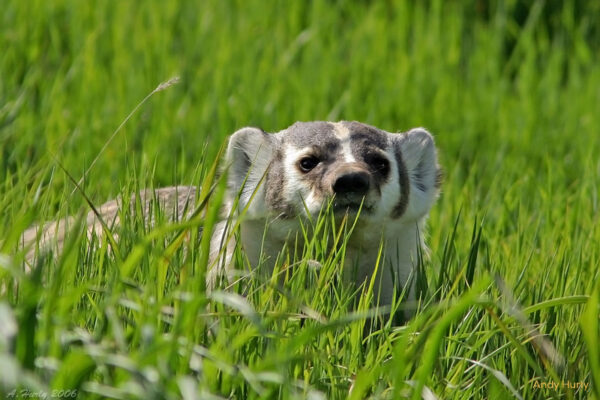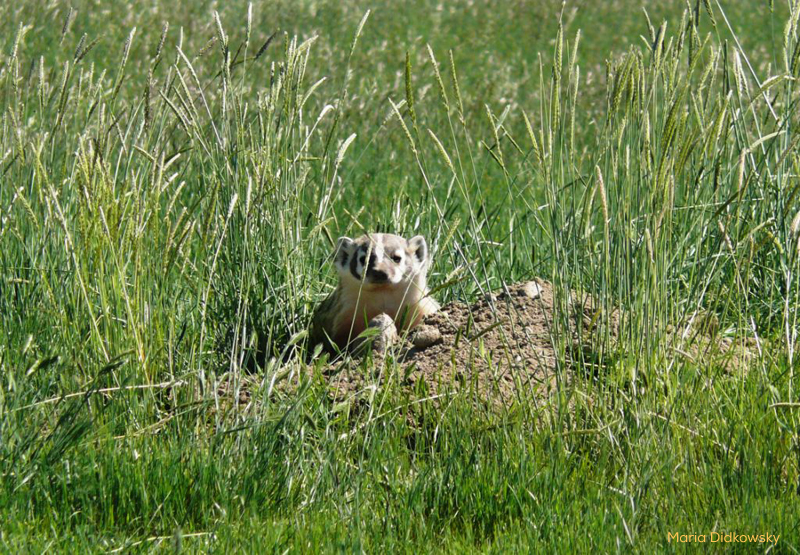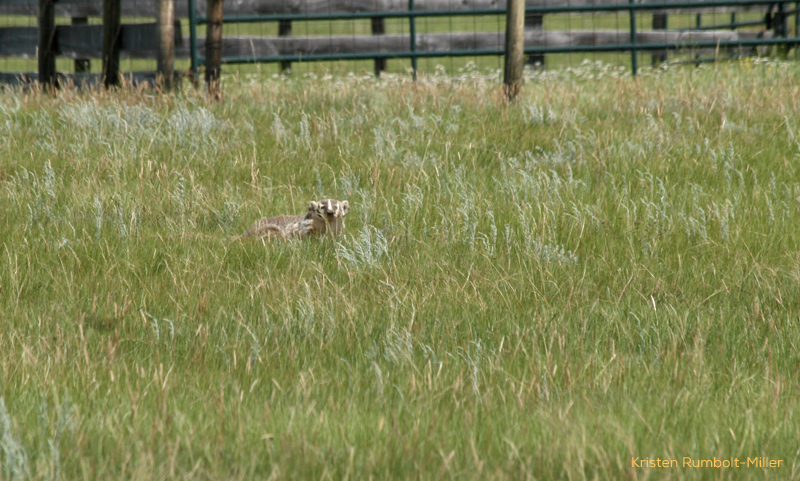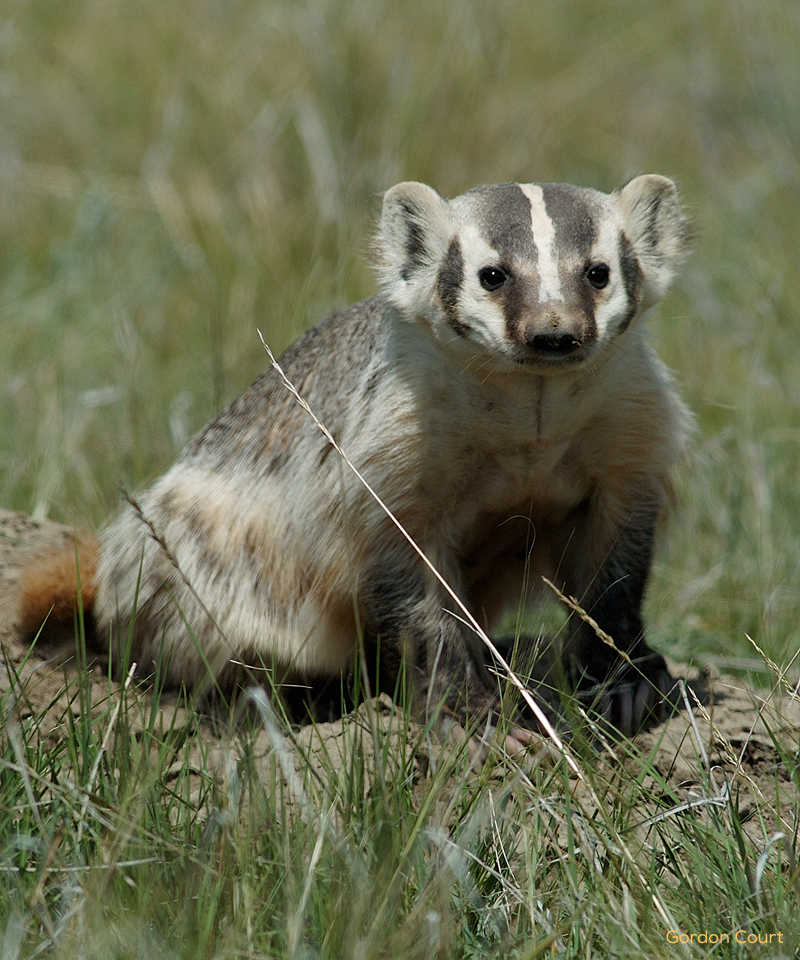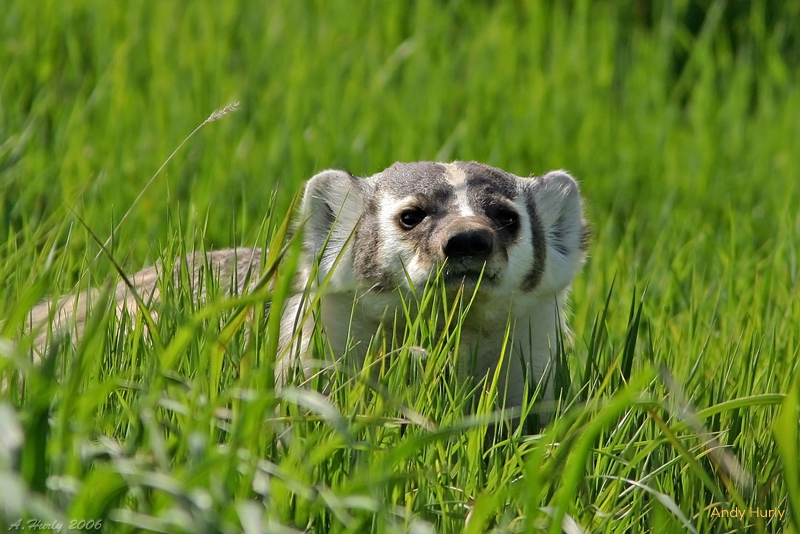
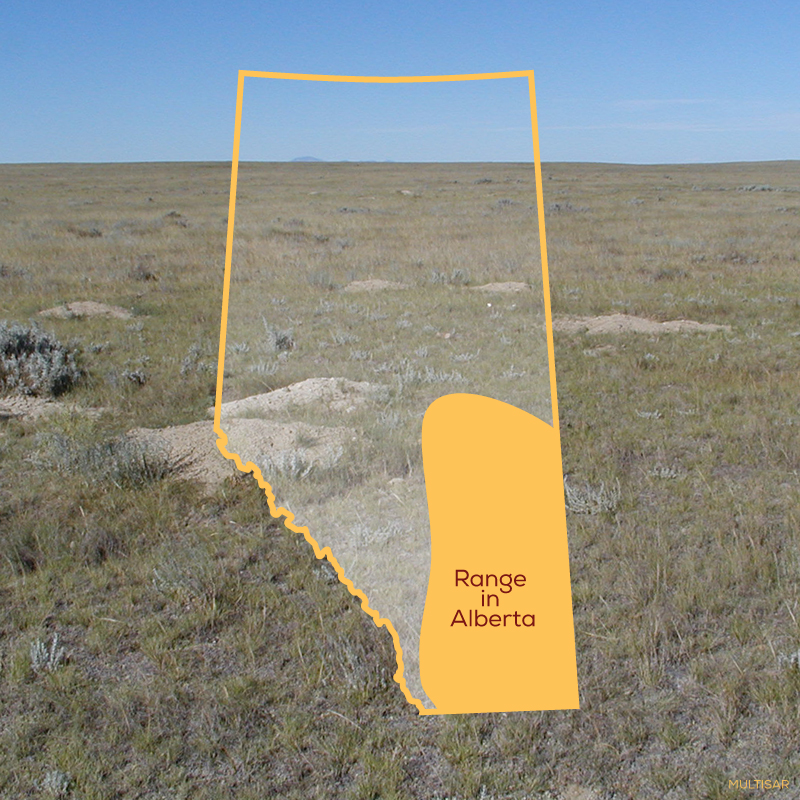
Status in Alberta: Sensitive (Data Deficient)
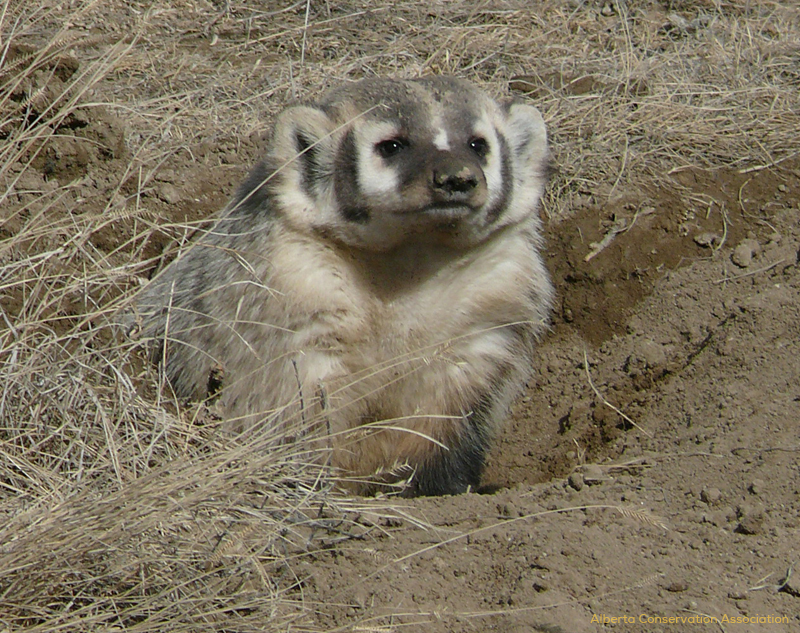
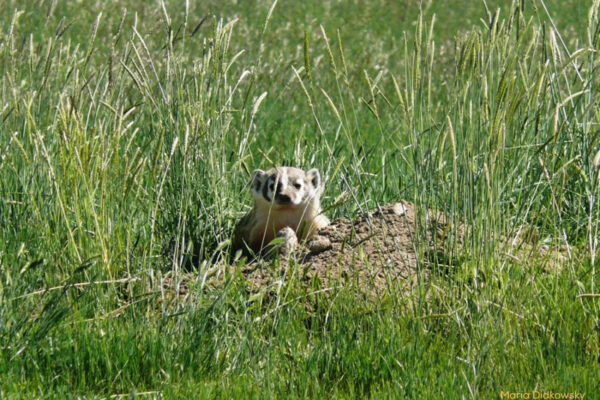
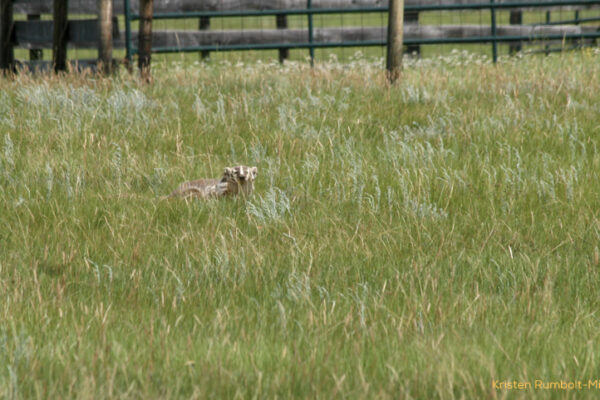
Open grassland habitats with populations of burrowing rodents.
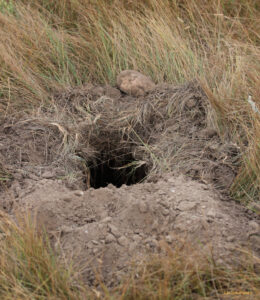
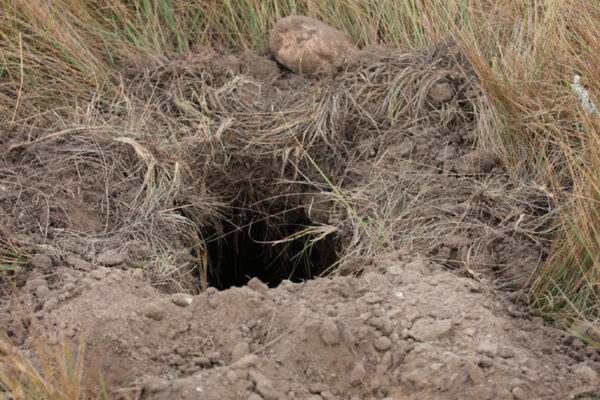
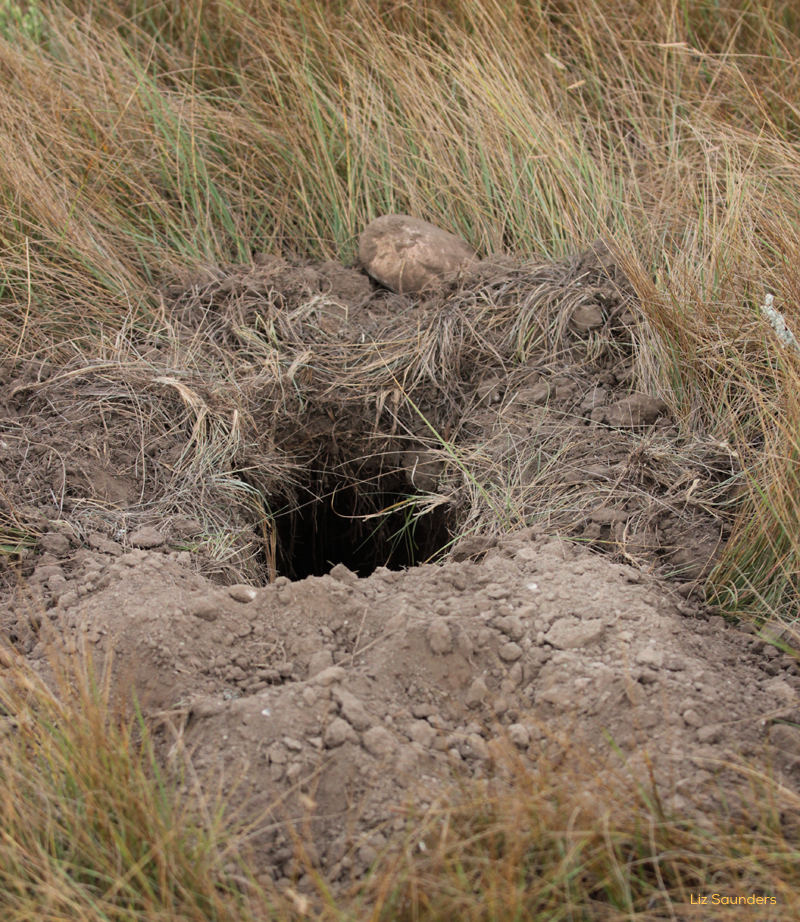
Badgers are expert diggers and can excavate large burrows.
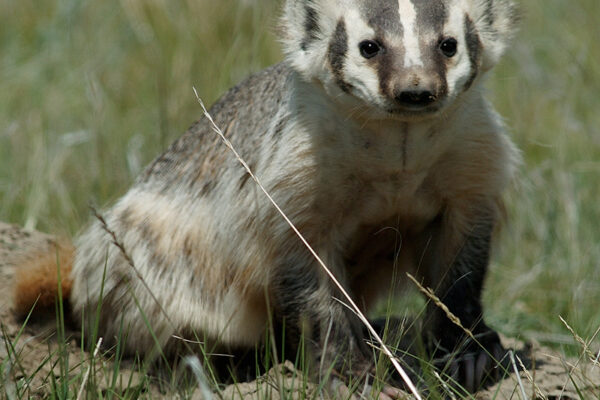
American Badgers are powerful diggers. Their thick, strong front legs and long front claws (up to 5 cm long!) can excavate a burrow extremely quickly, even when the ground is frozen. They dig burrows for daytime resting, raising their young and to find prey.
In Alberta, the American Badger’s main food sources are Richardson’s Ground Squirrels and Northern Pocket Gophers. In winter, they dig out ground squirrel burrows to find hibernating squirrels. Badgers will also eat an array of other items such as insects, birds, eggs, frogs, toads and snakes.
The numerous burrows dug by badgers play an important role in the prairie ecosystem. A variety of other animals use abandoned badger burrows, including Species at Risk, such as the Burrowing Owl, Swift Fox and Prairie Rattlesnake. As such, they are considered a “keystone species”. Burrowing also aerates the soil, improves water movement through soil layers and promotes the formation of organic matter.
American Badgers live solitary lives. Adults live alone and young badgers disperse from their litters when they are 3-4 months old. They have large home ranges and often only stay in one area for a few days before moving on. They are active primarily at night, spending the days underground.
Badgers were trapped in large numbers for their pelts in the late 1800s and early 1900s. This reduced badger populations and extirpated them from some parts of Alberta. In 2002 it was estimated that there were between 1,000 and 10,000 badgers in Alberta. This is a significant reduction from 1928 when over 18,000 pelts were harvested. Their population is likely still decreasing overall, although may be increasing in some areas.
Test your knowledge about Alberta’s grassland species at risk
© 2026 Multisar. All Rights Reserved