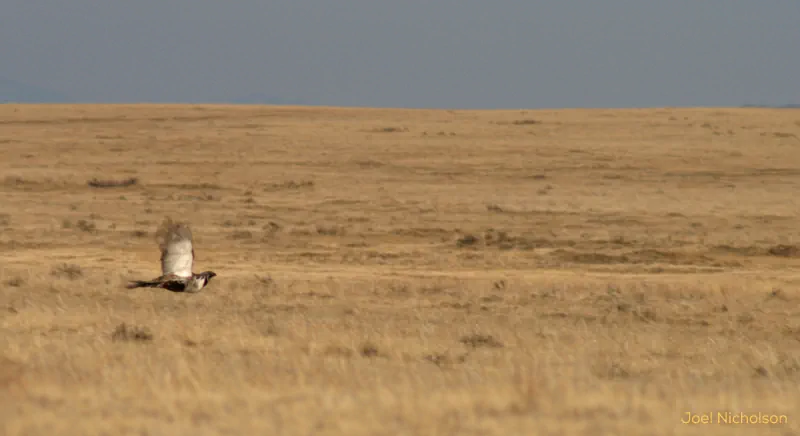
Status in Alberta: At Risk (Endangered)
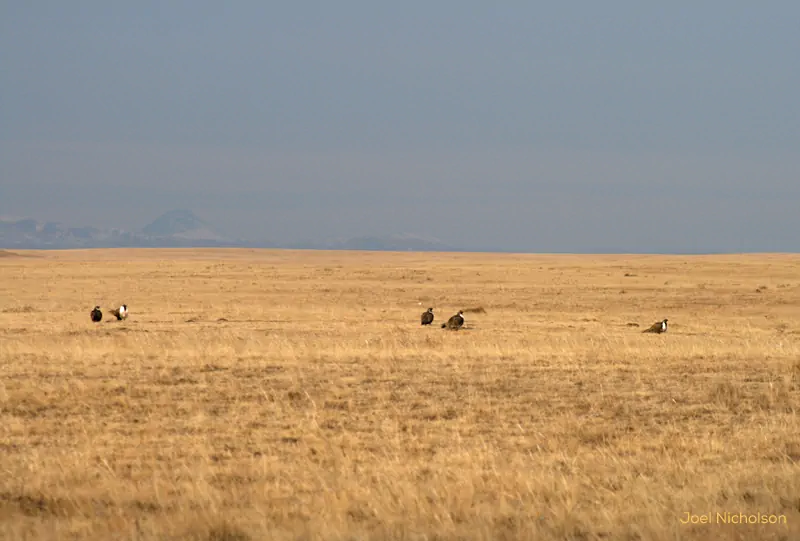
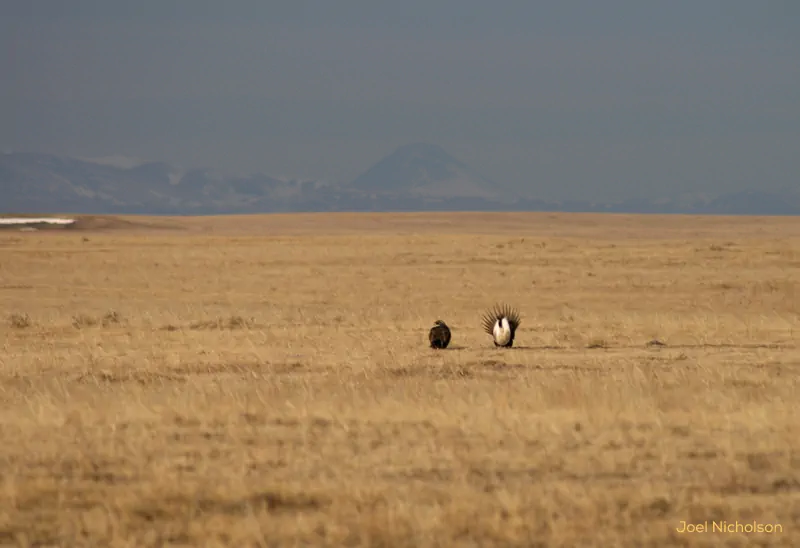
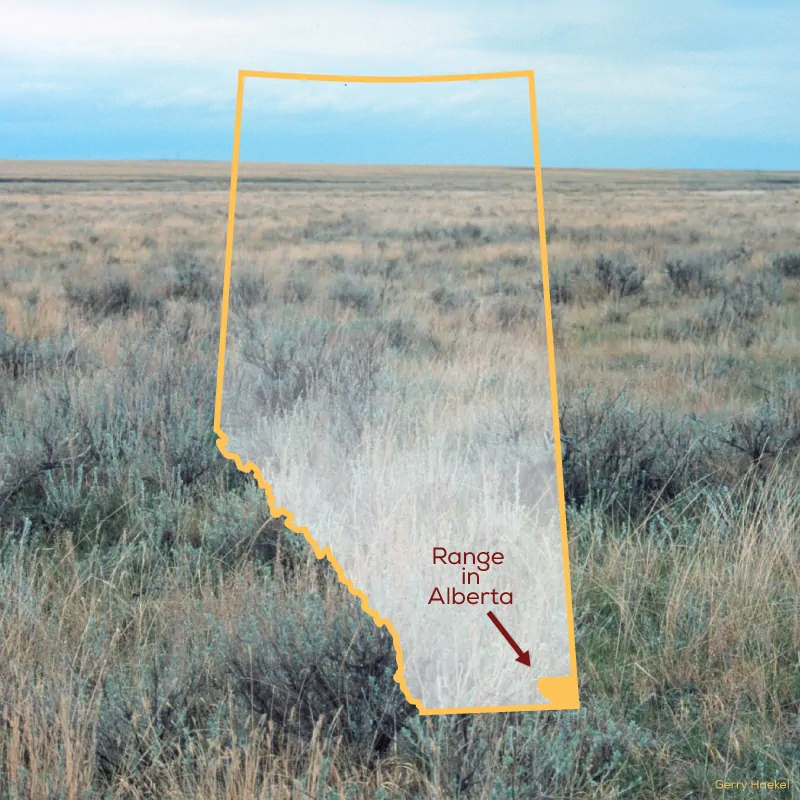
Native grasslands with silver sagebrush.
As their name suggests, Sage-grouse have a strong reliance on sage, particularly silver sagebrush (Artemisia cana). They eat the leaves and use the plant for shelter and protection. While they also eat other plants and insects in the spring and summer, sagebrush makes up 100% of their winter diet.
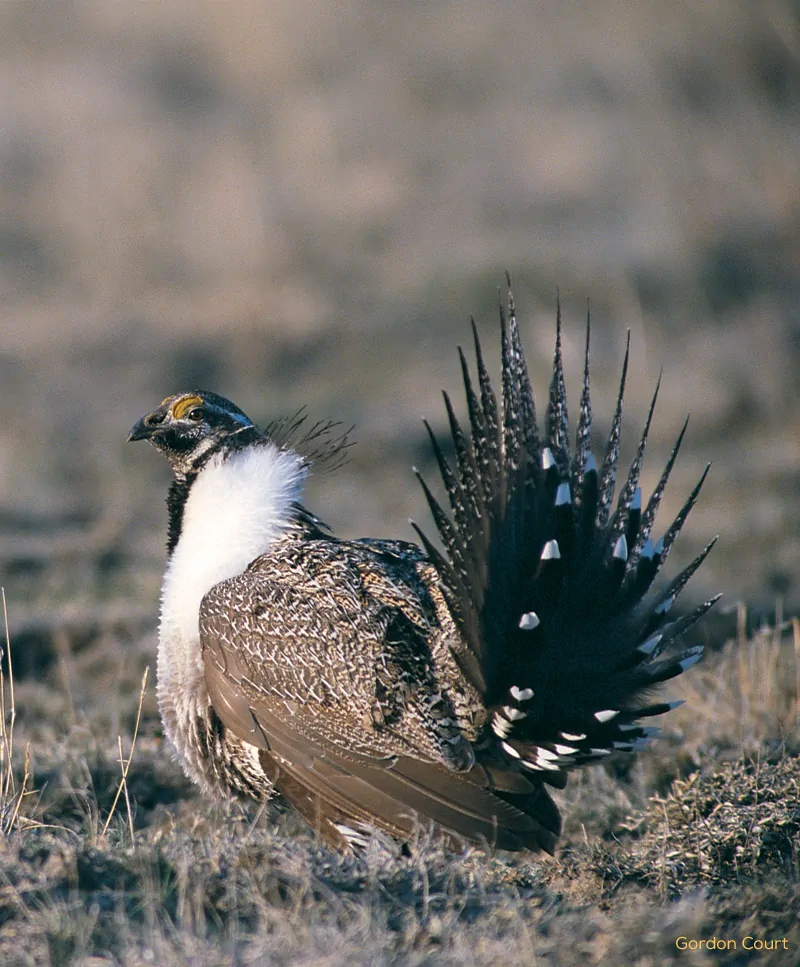
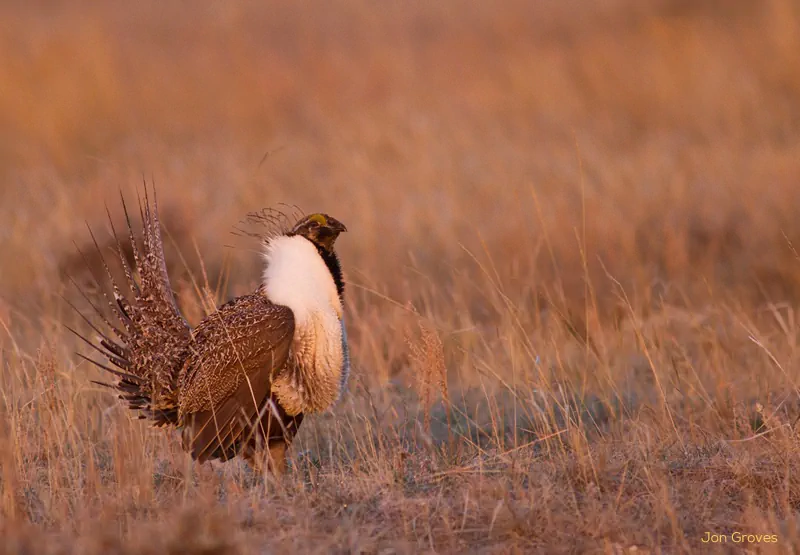
The Greater Sage-grouse is the largest grouse in North America, with the males weighing up to 2 kg – think of a very big chicken or a small turkey!
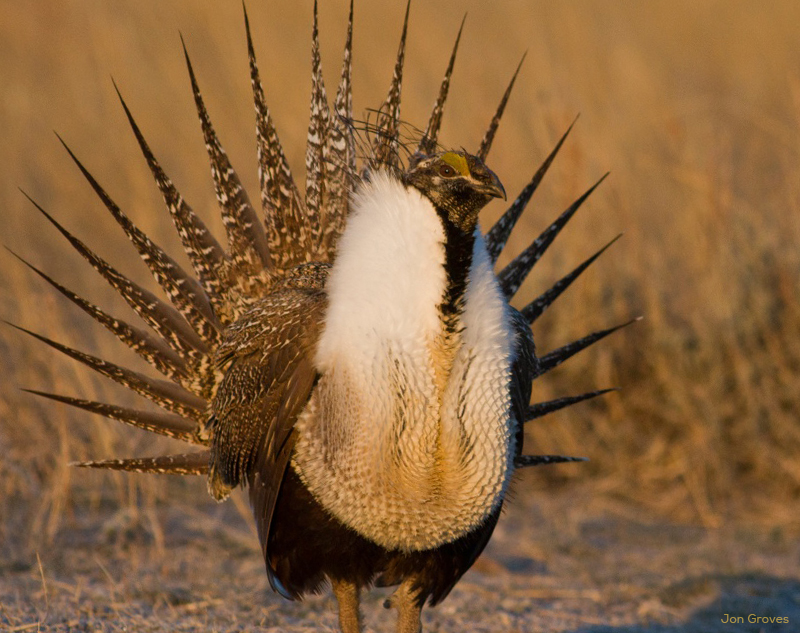
In early spring, Sage-grouse gather on traditional dancing grounds, called leks. The males fan their tail feathers, strut and make bizarre booming sounds by inflating the large yellow air-sacs on their breast to attract females.
Sage-grouse are a sensitive species and they avoid human activities, noise and infrastructures. They tend to stay more than a kilometer away from oil and gas well sites and may abandon their leks when there is industrial or other human activity nearby.
Sage-grouse have disappeared from most parts of their historical range in Alberta because of the conversion of grassland to agricultural crops, human disturbance, increased predation and disease. The few remaining individuals are restricted to a small area in the south-eastern corner of Alberta. In 2014, the population was estimated at about 50 individuals.
Wildlife biologists are working hard to try to prevent the further loss and disturbance of their habitat in Alberta and efforts are being made to reverse the population decline through a translocation program and significant habitat improvements.
Test your knowledge about Alberta’s grassland species at risk
© 2026 Multisar. All Rights Reserved