Status in Alberta: Special Concern (May be at Risk)
River valley bottoms and coulees with Saskatoon shrubs and cottonwood trees.
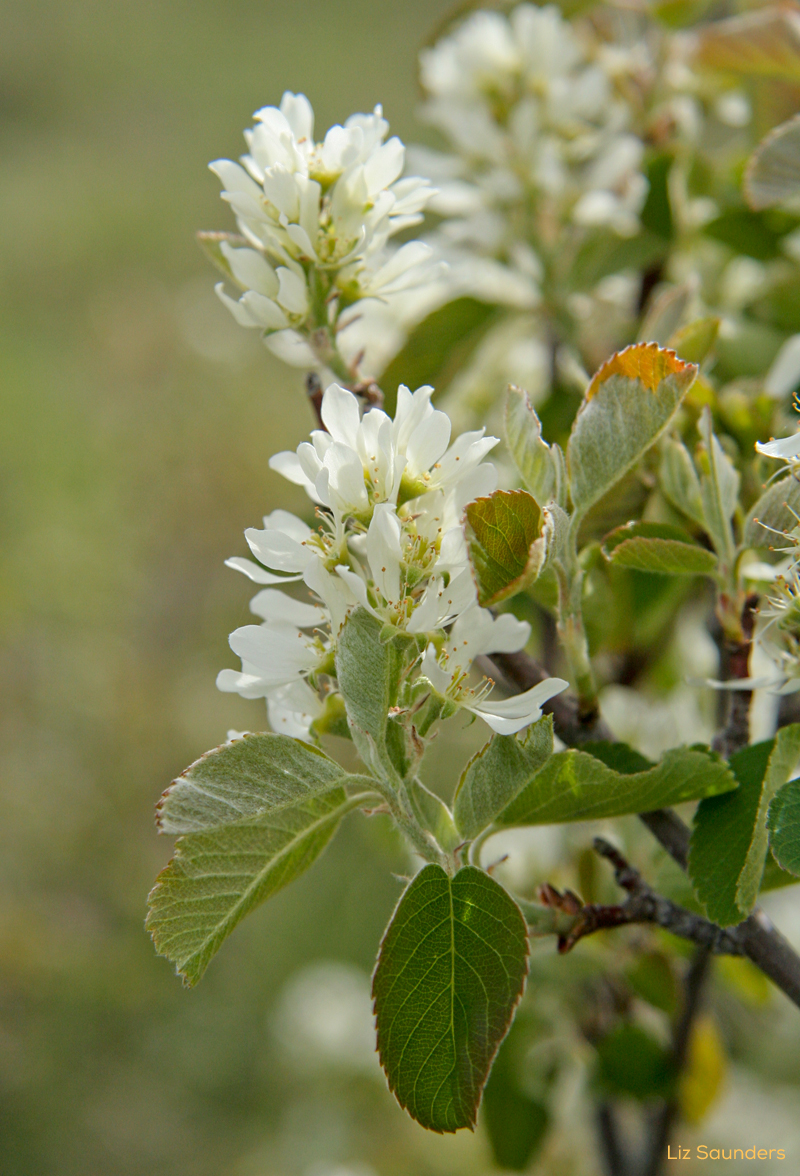
In Alberta, the Weidemeyer’s admiral depends upon Saskatoon shrubs in which to lay their eggs.
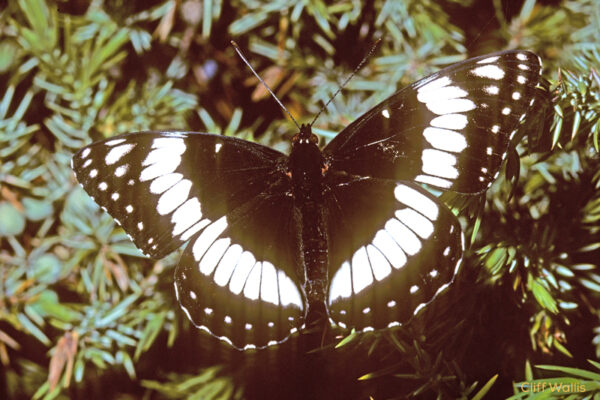
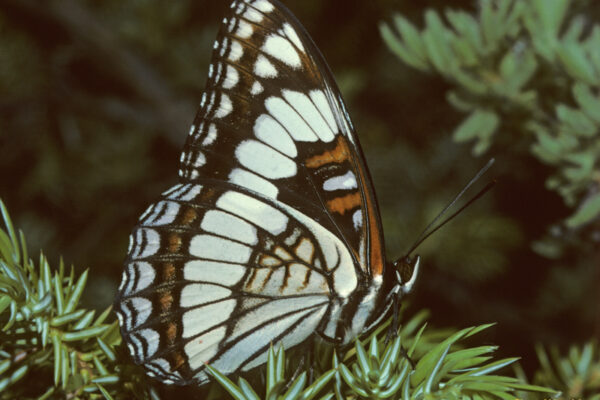
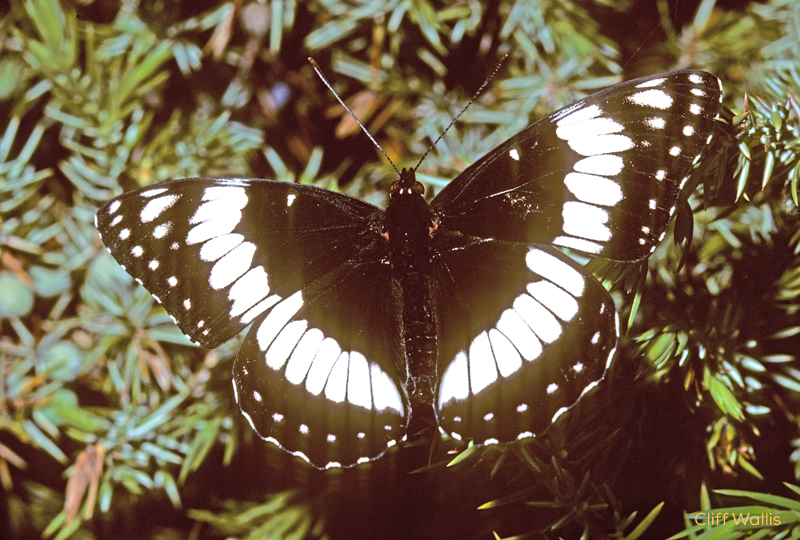
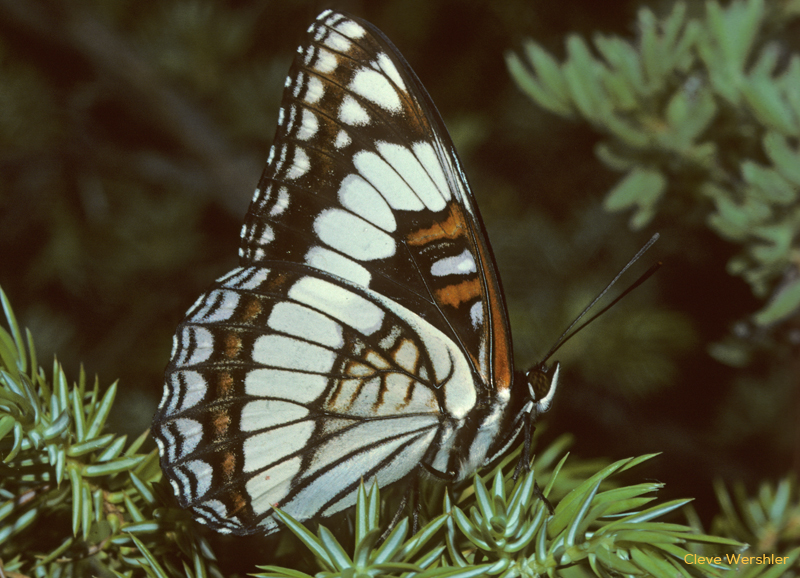
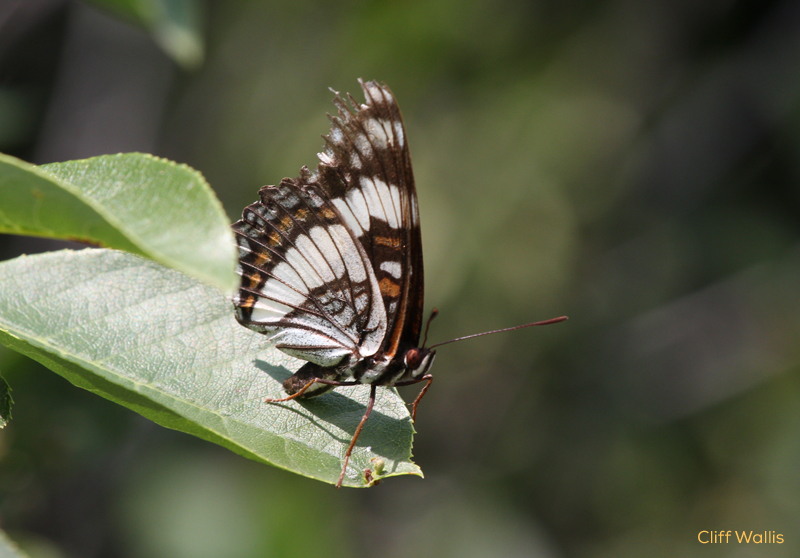
Weidemeyer’s Admirals are restricted to a small area in south-eastern Alberta, but many people are more familiar with their common, but close relative, the White Admiral. Weidemeyer’s Admirals have less reddish-orange colour on their wings compared to White Admirals. They are a large butterfly, with a wingspan between 55 to 72 mm (about the size of a credit card).
In Alberta, the Weidemeyer’s admiral depends upon Saskatoon shrubs in which to lay their eggs.
In Alberta, the only confirmed host plant of the Weidemeyer’s Admiral caterpillar is the Saskatoon shrub. Female butterflies lay their eggs on Saskatoon leaves, which the caterpillars eat after hatching. In the fall, caterpillars use silk to roll a Saskatoon leaf around themselves and overwinter inside. They emerge in the spring and continue feeding before pupating.
Weidemeyer’s Admiral caterpillars use mimicry to conceal themselves from their primary predator, songbirds. They have evolved to look like bird droppings. This dissuades most birds from picking them up and eating them.
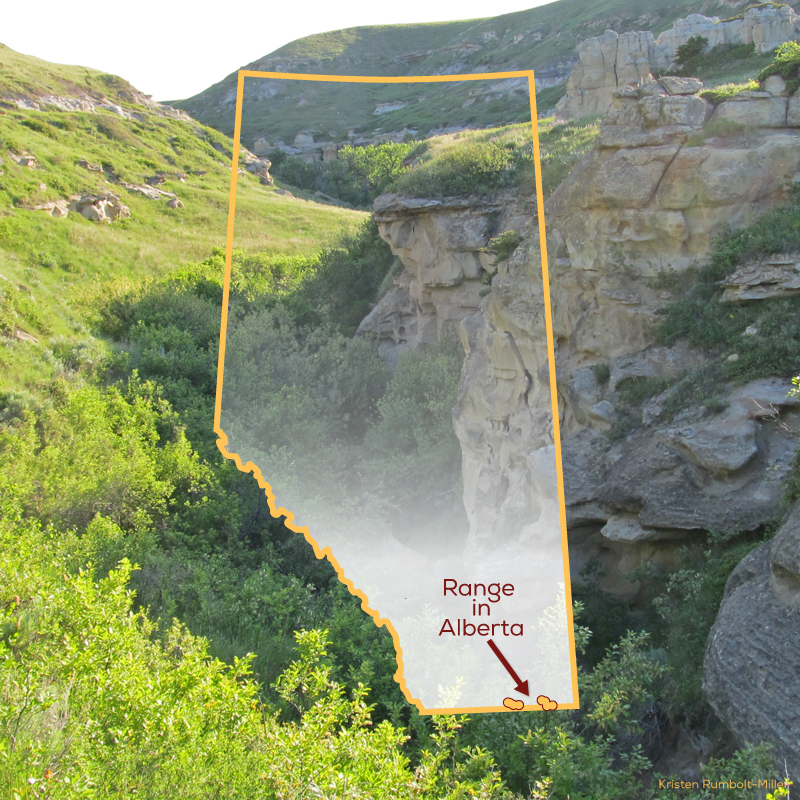
The Weidemeyer’s Admiral is at the northern edge of its range in Alberta and has been found only in the far south of the province, at seven sites along the Milk River and its tributaries. It is likely that it occurs at other sites along the Milk River, but butterflies are difficult to find and survey.
A population of between 1800 – 3200 individuals has been estimated, based on the number found per kilometer and the number of kilometers of suitable habitat that is available.
Test your knowledge about Alberta’s grassland species at risk
© 2026 Multisar. All Rights Reserved